

Cooperation for Hubs in Urban Logistics (CO4HUB)
Transportation of goods in many urban areas has increased over the last years. This has made logistics hubs important for extra-urban and inner-city freight, as they allow more efficient transportation by bundling orders and sustainable means of transportation.
Challenges addressed by this project
Urban freight is a major driver of congestion, emissions, and noise in European cities, and the rise of the 15-minute city risks further intensifying these pressures. Ensuring reliable access to essential goods while safeguarding urban livability requires systemic, sustainable solutions. Urban logistics hubs (ULHs) are widely seen as a promising approach, yet past initiatives have struggled to deliver impact because they overlooked three critical challenges: space, adoption, and rivalry.
How we address them
By combining pilots, simulations, and innovative governance and business models, the CO4HUB research and development project will design scalable ULH solutions that overcome spatial, economic, and competitive constraints. The ultimate research question is: How can ULHs be designed and governed to deliver measurable sustainability benefits while remaining economically viable in diverse urban contexts?
What we will deliver
This project will pioneer next-generation urban logistics hubs (ULHs) that transform how cities move goods. We empower decision makers by delivering actionable insights on organizational setups, business models, and public policies—backed by real-world pilots and advanced simulations.
- Organizational setups will build trust and collaboration among stakeholders, unlocking shared infrastructure that cuts delivery distances and emissions.
- Business models will combine ULHs with complementary services, creating powerful value propositions that boost efficiency, reduce costs, and deliver clear benefits for all actors.
- Public policies will accelerate the transition to sustainable urban transport, driving shipment consolidation and removing excess delivery vehicles from city streets.
This results in cleaner air, less congestion, and more livable cities. By proving both impact and scalability, this project positions ULHs as a cornerstone of future-ready, sustainable urban logistics across Europe and beyond.
.
Members and collaborators
Participating countries: Austria, Finland, France, Sweden
Funded project partners: Aalto-korkeakoulusäätiö sr, ACTES, CellSwap AB, Clean Motion AB, Cooperative Carbone, Excelia Group, Helsingborgs kommun, Herry Consult GmbH,
KTH Royal Institute of Technology, Ragn-Sells Recycling AB, Struggle Creative Oy, Université de Bordeaux, VCÖ – Mobilität mit Zukunft, Yeply Oy
Other project partners: City Lienz, LogPOINT Logistics Services GmbH, NSR AB, Oy Merinova Ab, Stadt Graz, Stadtgemeinde Tulln, WienIT GmbH, Wirtschaftskammer Wien, Wolt Enterprises Oy
News & Events
-
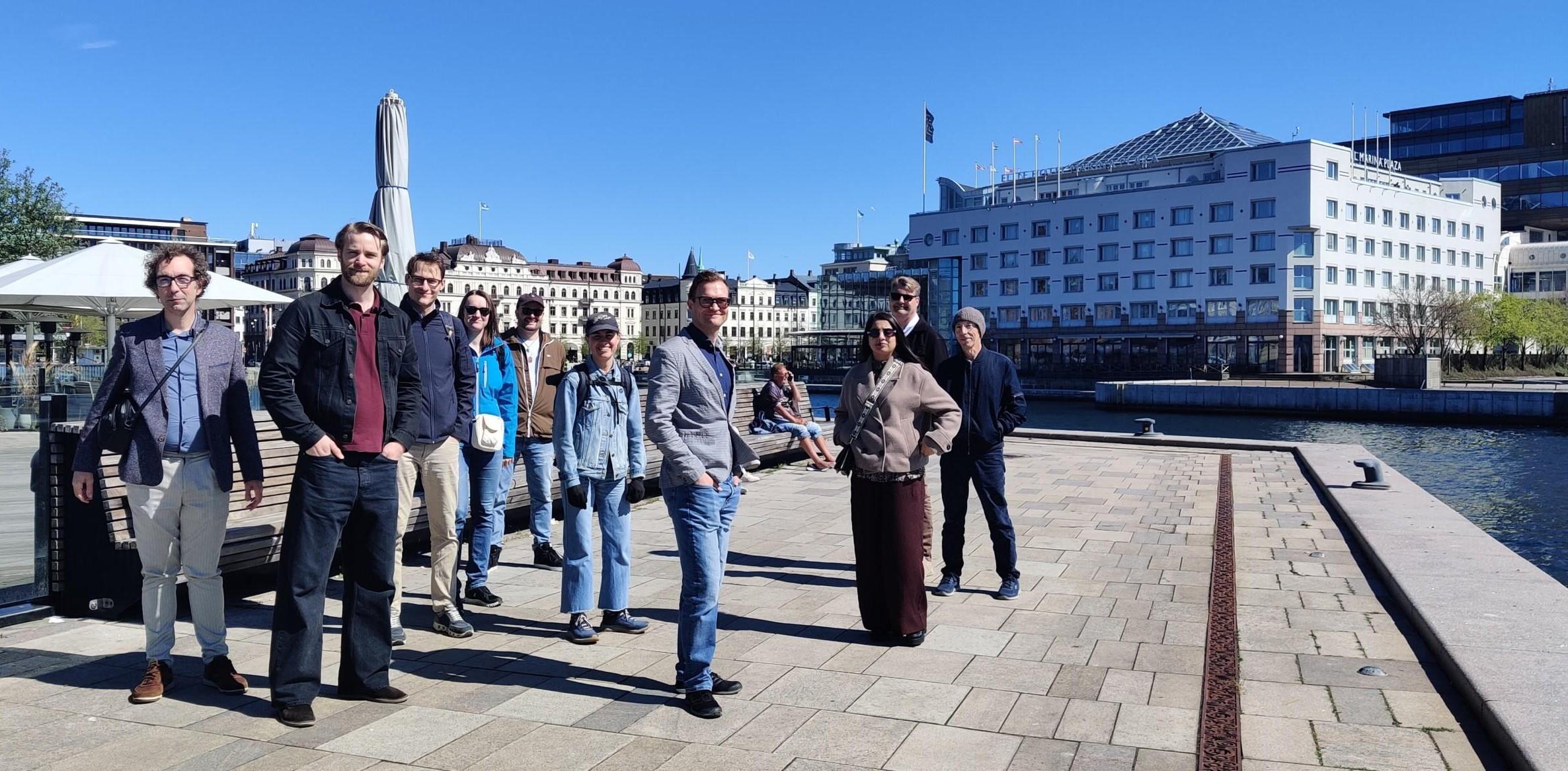
‘Improve the overall quality of life’ – CO4HUB discusses future urban logistics hubs in Helsingborg
Author & Photos: Joel Wolff Members of the CO4HUB consortium gathered in Helsingborg on 4–5 May for the project’s first in-person consortium meeting. Through workshops and knowledge-sharing sessions, partners explored how future urban logistics hubs can become financially viable while contributing to more sustainable and liveable cities. Twenty members of the Cooperation for Hubs in…